 Skip to content

AsiaTEF MUSIC COMPETITION
The AsiaTEF Music Competition is structured into four main categories, designed to provide a comprehensive platform for musicians of different ages, backgrounds, and musical styles. Each category focuses on a specific area of performance, ensuring a fair, progressive, and internationally benchmarked competition experience.ory
A. Classical Music Solo Competition (by Grade)
A structured graded competition for solo Piano and Vocal performers, using internationally recognized examination syllabi to assess technical skill, musicality, and classical interpretation.
B. Contemporary Music Solo Competition (by Age)
A dynamic solo competition featuring modern genres such as pop, jazz, rock, and more, designed to evaluate creativity, stage presence, and contemporary performance skills across age groups.
C. Traditional Music Solo Competition (by Age)
A cultural performance category for solo musicians playing traditional instruments, celebrating authenticity, heritage, and artistic expression across different age levels.
D. Music Ensemble Competitions
Collaborative Ensemble Performance Categories
A collaborative performance category for duets, trios, quartets, and larger groups, focusing on teamwork, balance, musical coordination, and ensemble artistry across any genre and instrumentation.
1. Duet / Trio / Quartet Ensemble Competition
Open to ensembles consisting of 2 to 4 performers. This category emphasizes musical interaction, coordination, balance, and collaborative performance skills across all genres and instrumentations.
2. Large Ensemble Competition (5 Members & Above)
Open to ensembles consisting of 5 or more performers. This category highlights group unity, musical balance, stage coordination, and overall ensemble presentation across any genre and instrumentation.
A. Classical Music
(Solo Competition by Grade)
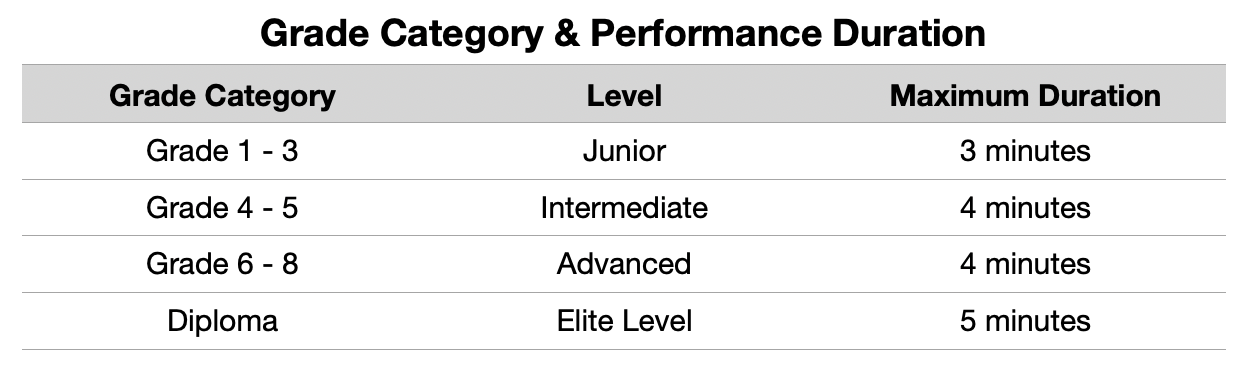
A. CLASSICAL MUSIC SOLO BY GRADE
Classical Music Competition by Grade Overview
The AsiaTEF Classical Music Competition by Grade is a structured performance category designed to develop and showcase technical excellence, musical interpretation, and artistic maturity in classical music performance. It provides a standardized platform aligned with internationally recognized graded examination systems.
This category is open to solo performers in Classical Piano and Classical Vocal.
Instrument Categories
1. Classical Piano (Solo Performance Only)
2. Classical Vocal (Solo Performance Only; accompanist allowed)
Repertoire Guidelines
Participants must select their repertoire from officially published graded examination syllabi issued by internationally recognized examination boards, including but not limited to:
☑︎ ABRSM (Associated Board of the Royal Schools of Music)
☑︎ Trinity College London
☑︎ AMEB (Australian Music Examinations Board)
☑︎ RCM (Royal Conservatory of Music)
☑︎ LCM (London College of Music)
☑︎ IMEB
☑︎ Guildhall School of Music & Drama
☑︎ Or any equivalent accredited international examination board
All repertoire must be selected strictly from official graded syllabus lists published between 2016 and 2026 (inclusive).
Participants must ensure that:
☑︎ Selected pieces are officially listed within the approved syllabus of the chosen examination board
☑︎ Repertoire corresponds accurately to the participant’s declared grade level
☑︎ Performance follows the stylistic and technical requirements of the original syllabus
☑︎ Non-syllabus or unlisted works are not permitted
☑︎ All repertoire submissions are subject to verification by the adjudication panel, and participants may be required to provide syllabus references upon request
Performance Format
☑︎ Solo performance only
☑︎ Classical Vocal participants may perform with a live accompanist or approved accompaniment format
☑︎ Performances should reflect standard classical recital practice and technical discipline
Competition Objective
This category aims to:
☑︎ Standardize classical performance benchmarking across international examination systems
☑︎ Encourage structured musical progression through graded repertoire
☑︎ Develop artistic interpretation and technical control in musicians
☑︎ Identify high-potential performers for advanced artistic development within AsiaTEF programs
B. Contemporary Music
(Solo Competition by Age Group)
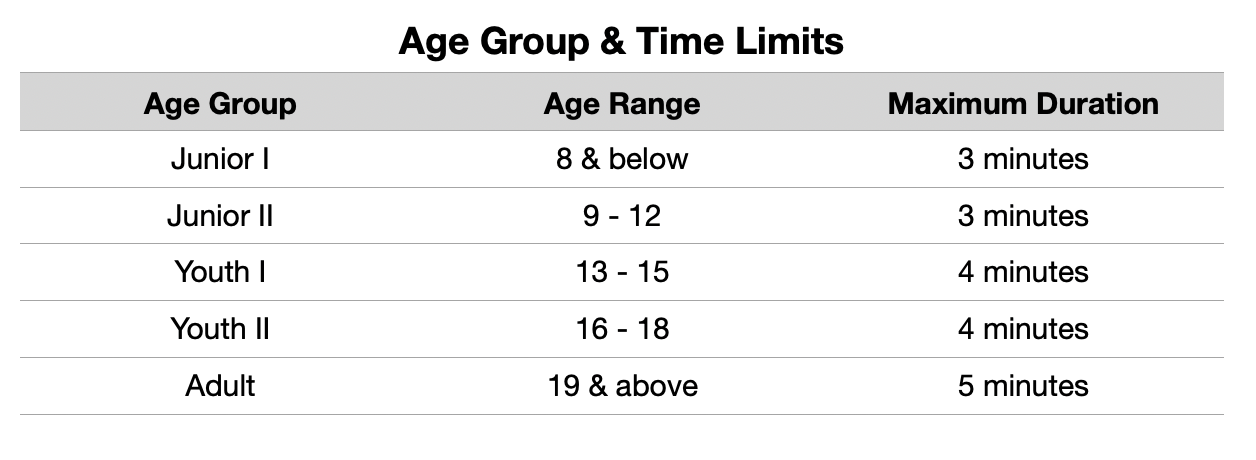
B. CONTEMPORARY MUSIC BY AGE GROUP
Contemporary Music Competition Overview
The AsiaTEF Contemporary Music Competition is a dynamic performance category that showcases creativity, stage presence, and versatility across modern popular music styles. It provides a platform for performers to demonstrate individuality, musical expression, and technical control in contemporary genres.
This category is open to solo performers only in Piano, Singing, and Drum.
Genres Accepted
Participants may choose repertoire from the following genres:
☑︎ Modern
☑︎ Contemporary
☑︎ Jazz
☑︎ Rock
☑︎ Country
☑︎ Pop
☑︎ Blues
☑︎ Electronic
☑︎ Hip Hop
Note: Classical music and traditional music are strictly excluded from this category.
Instrument Categories
☑︎ Piano (Solo Performance Only)
☑︎ Singing (Solo Performance Only)
☑︎ Drum (Solo Performance Only)
Note: Traditional instruments are not permitted in this category.
Performance Format
☑︎ Solo performance only
☑︎ Contemporary participants may use MP3 backing tracks
☑︎ Live accompaniment is optional, depending on performance style
☑︎ Performances should demonstrate musical identity, rhythm control, and stage confidence
Competition Objective
This category aims to:
☑︎ Encourage creativity and individuality in modern music performance
☑︎ Develop stage confidence and performance versatility
☑︎ Provide exposure to multiple contemporary music genres
☑︎ Support artistic growth beyond classical training systems
☑︎ Identify emerging talent in modern music performance styles within AsiaTEF programs
Evaluation Focus
Performances are assessed based on:
☑︎ Musicality and expression
☑︎ Rhythm and timing accuracy
☑︎ Stage presence and confidence
☑︎ Vocal/instrumental control
☑︎ Creativity and interpretation of genre style
C. Traditional Music
(Solo Competition by Age Group)
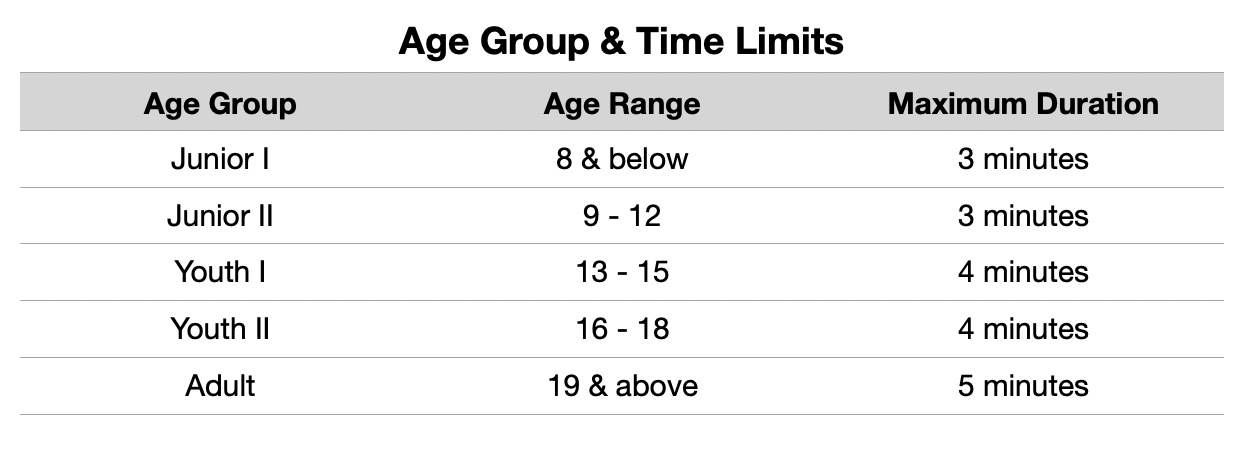
C. TRADITIONAL MUSIC SOLO BY AGE GROUP
Traditional Music Competition Overview
The AsiaTEF Traditional Music Competition celebrates cultural heritage and artistic expression through traditional music performance. This category provides a platform for musicians to showcase authenticity, technique, and musical storytelling through instruments rooted in their cultural origins.
This category is designed for solo performances only, grouped by age level to ensure fair and structured evaluation.
Musical Style
Participants may perform using any traditional instrument and traditional music style, including instruments from diverse cultural backgrounds worldwide.
The focus is on preserving and presenting authentic musical traditions, techniques, and cultural expression through performance.
Performance Format
☑︎ Solo performance only
☑︎ MP3 backing tracks are allowed where appropriate to support performance
☑︎ Performances should maintain the integrity and style of the selected traditional music
☑︎ Stage presentation may include cultural elements where relevant
Competition Objective
This category aims to:
☑︎ Preserve and promote traditional music heritage across cultures
☑︎ Encourage young musicians to explore cultural identity through music
☑︎ Develop performance confidence in traditional instrumental styles
☑︎ Provide an international platform for cultural exchange through music within AsiaTEF programs
☑︎ Recognize artistic excellence in traditional music performance
Evaluation Focus
Performances are assessed based on:
☑︎ Authenticity of style and cultural expression
☑︎ Technical skill and instrumental control
☑︎ Musicality and interpretation
☑︎ Stage presence and presentation
☑︎ Overall artistic impact
D.MUSIC ENSEMBLE COMPETITIONS
The AsiaTEF Music Ensemble Artist Competition celebrates collaborative musicianship, creativity, and artistic teamwork across diverse performance groups. This category is designed to highlight the synergy between performers, showcasing how musical interpretation, balance, and communication come together in ensemble performance.
This category is open to all ages, with flexible instrumentation and unrestricted music styles.
General Performance Guidelines
☑︎ Mixed age groups are allowed
☑︎ Any combination of instruments and/or vocal performances
☑︎ Any music style or genre is accepted
☑︎ Solo performances are not permitted (ensemble only)
☑︎ Backing tracks are strictly not allowed
☑︎ Live performance only
Performance Duration
☑︎ Maximum performance duration: 5 minutes (all ensemble categories)
Ensemble Categories
1. DUET, TRIO & QUARTET
This category is open to small ensembles consisting of 2 to 4 performers, including duets, trios, and quartets.
Performance Guidelines:
☑︎ Any combination of instruments and vocals
☑︎ Mixed age groups allowed
☑︎ Any music genre permitted
☑︎ Focus on balance, coordination, and musical interaction between performers
☑︎ Live performance only (no backing tracks)
☑︎ Maximum duration: 5 minutes
2. ENSEMBLE
This category is open to ensembles consisting of 5 or more performers, including both small and large ensemble formations.
Performance Guidelines:
☑︎ Any combination of instruments and vocals
☑︎ Mixed age groups allowed
☑︎ Any music genre permitted
☑︎ Focus on ensemble coordination, arrangement, and group dynamics
☑︎ Live performance only (no backing tracks)
☑︎ Maximum duration: 5 minutes
Competition Objective
This category aims to:
☑︎ Develop teamwork and collaborative musicianship
☑︎ Encourage creativity in ensemble arrangement and performance
☑︎ Promote musical communication and group balance
☑︎ Provide a platform for cross-age and cross-instrument collaboration
☑︎ Showcase artistic innovation through group performance within AsiaTEF programs
SCORING
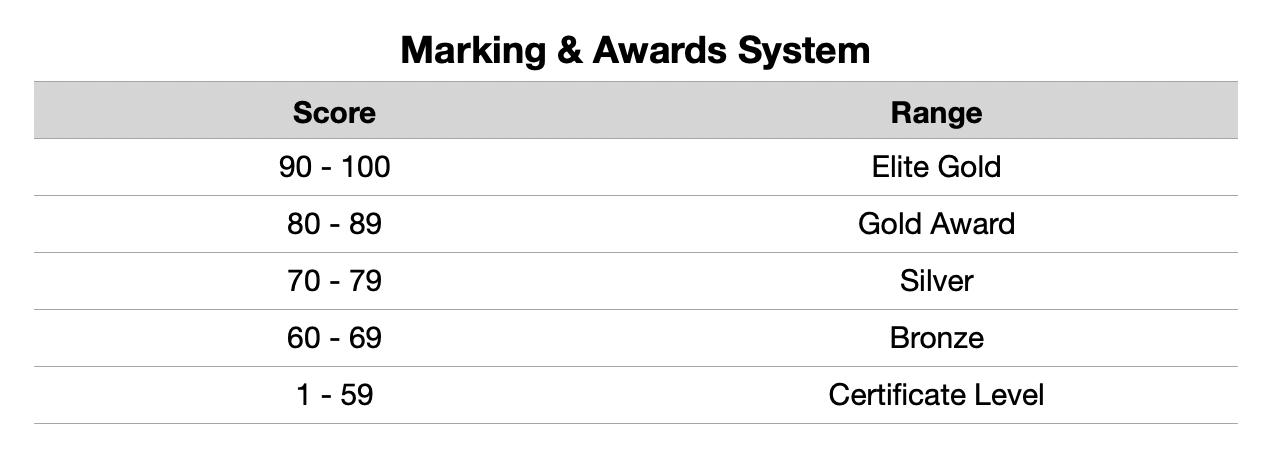
AsiaTEF Elite Championship Award
In each competition category, participants are evaluated based on a standardized scoring system. While multiple award levels will be given, only one Champion will be selected per division within each category.
The Category Champion will be chosen from participants who achieve Elite Gold (90–100 marks) and obtain the highest overall score in their respective division.
Championship Selection Criteria
✅ Only participants awarded Elite Gold (90–100) are eligible for Championship selection
✅ The participant with the highest mark in each division will be declared the Champion
✅ In the event of a tie, the adjudication panel reserves the right to apply performance criteria review for the final decision.
Example of Championship Allocation
Classical Music Competition (by Grade)
Grade 1–3 → 1 Champion
Grade 4–6 → 1 Champion
Grade 7–8 → 1 Champion
Diploma Level → 1 Champion
Summary
Each division within each category will produce one official Champion, recognizing the highest-scoring Elite Gold performer as the top achiever in that division.
